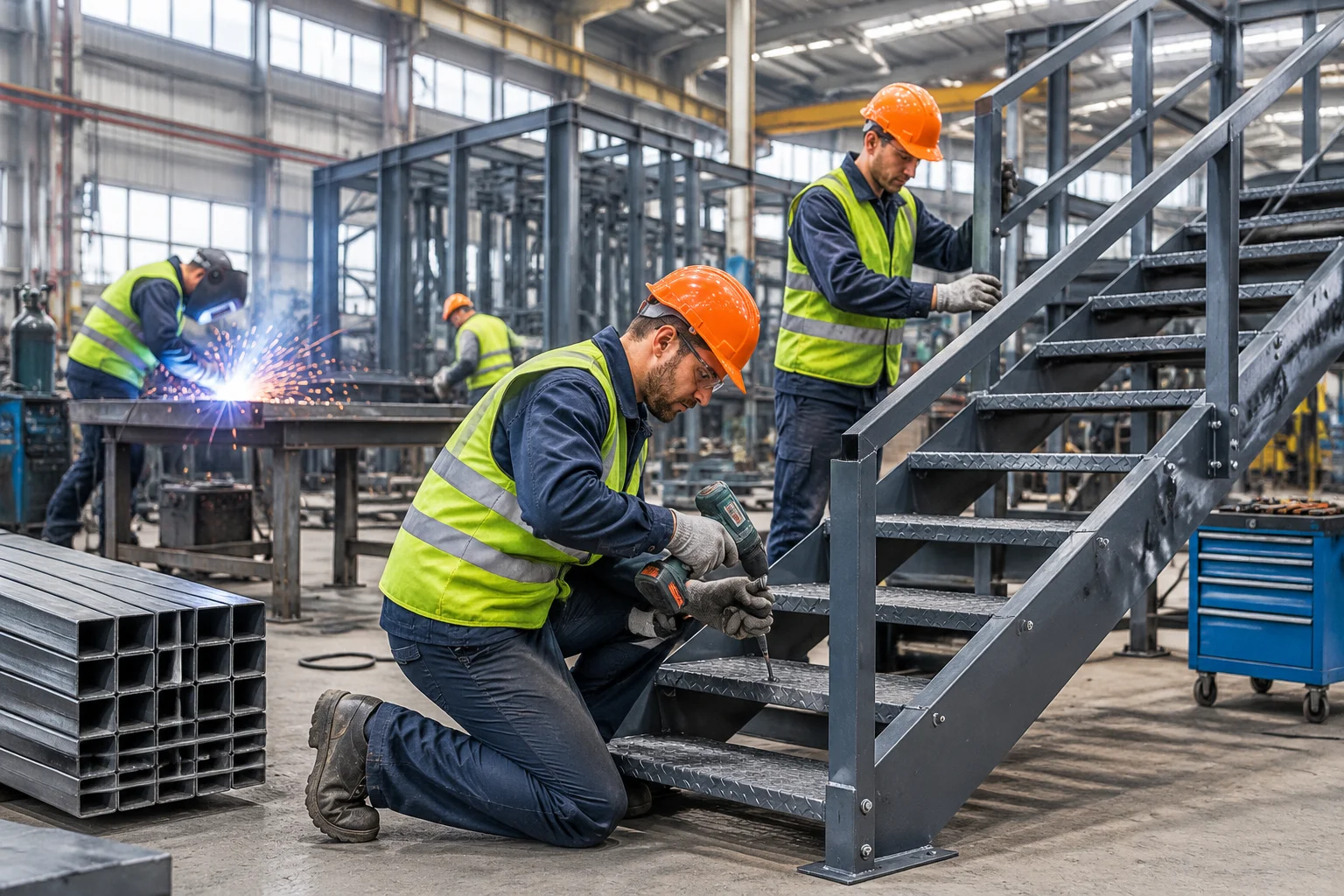
Heavy steel construction demands more than just raw power and heavy machinery; it requires an uncompromising eye for geometry, material behavior, and structural integrity. Inside the workshop, raw steel profiles are transformed into load-bearing frames, functional staircases, and safety railings that must withstand decades of constant mechanical stress.
Every successful project begins with raw stock resting on the storage racks, waiting for its turn on the cutting tables. The sheer weight of industrial beams requires calibrated overhead cranes to maneuver them safely into position for the initial cuts.
The Critical Role of Precision Cutting
Cutting structural steel is not simply about splitting metal into shorter segments. Thermal cutting methods, such as high-definition plasma and oxy-fuel torches, must be carefully calibrated to prevent localized warping caused by intense heat. Sawing provides clean, perpendicular edges for heavy beams, while laser cutting handles intricate gussets and connection plates with micro-level accuracy.
Operators inspect each cut edge for slag, micro-cracks, and squareness before moving the pieces to the welding bays. A poorly prepared edge compromises the entire joint, which makes this initial mechanical phase the foundation of structural safety.
Welding Techniques That Hold Weight
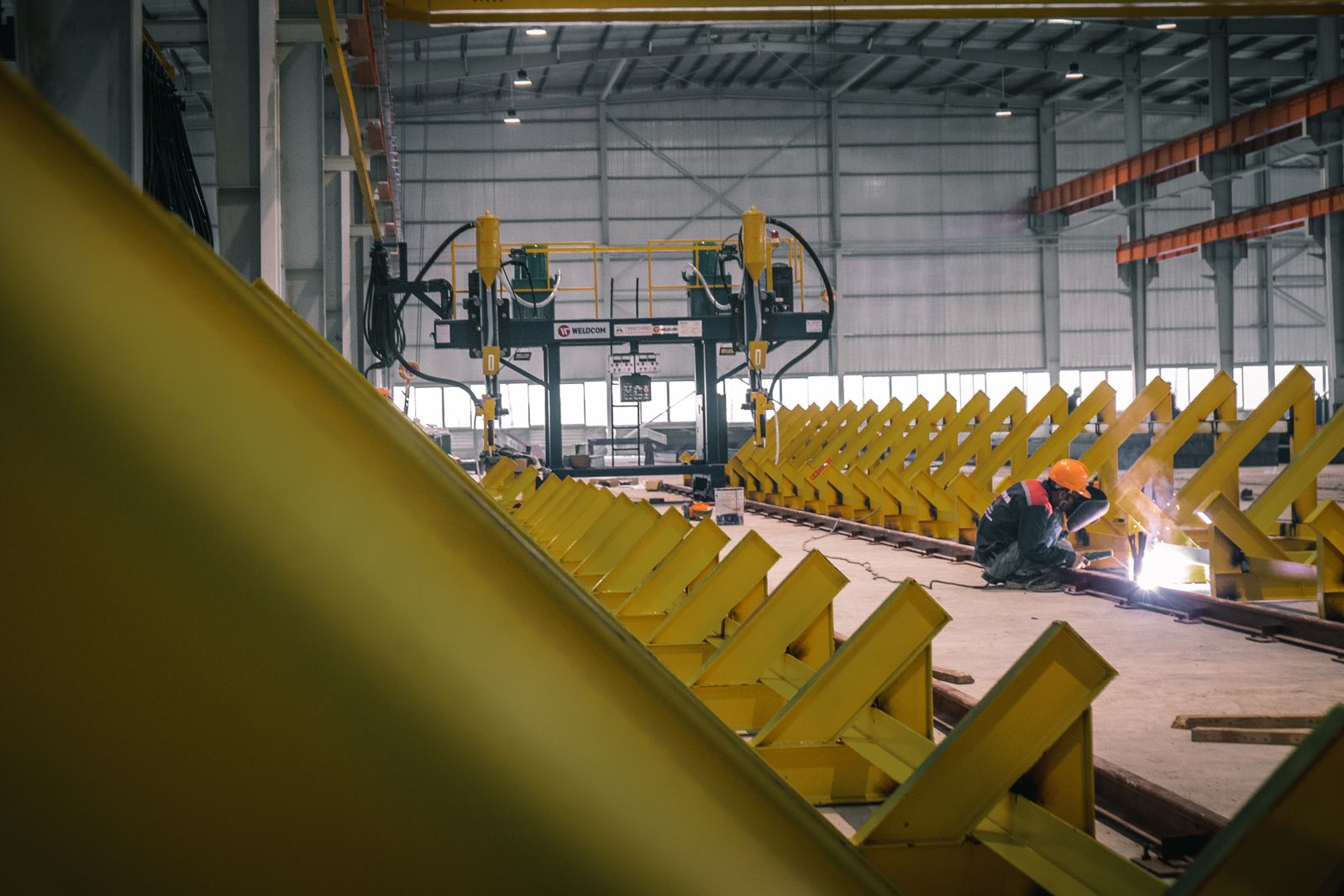
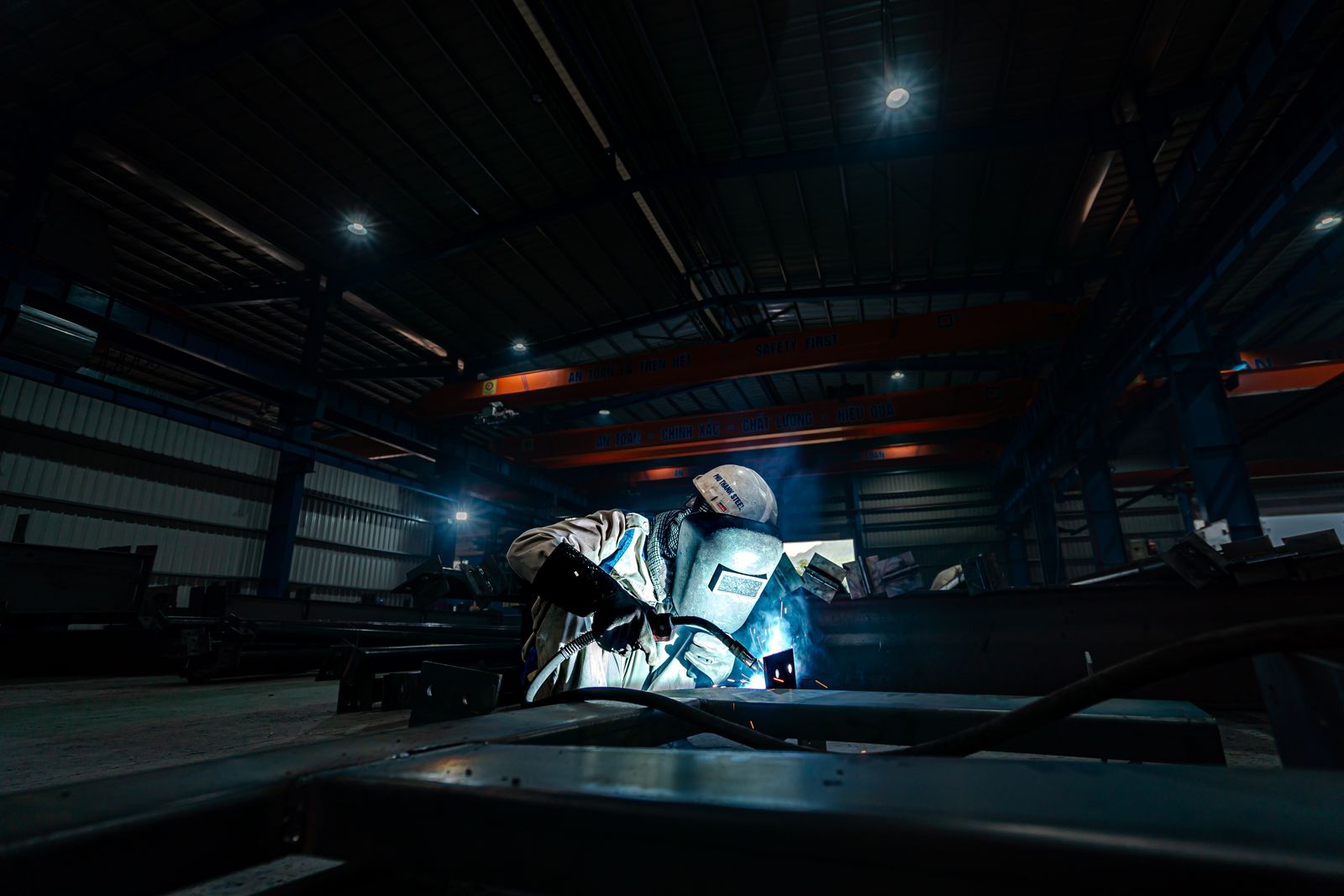
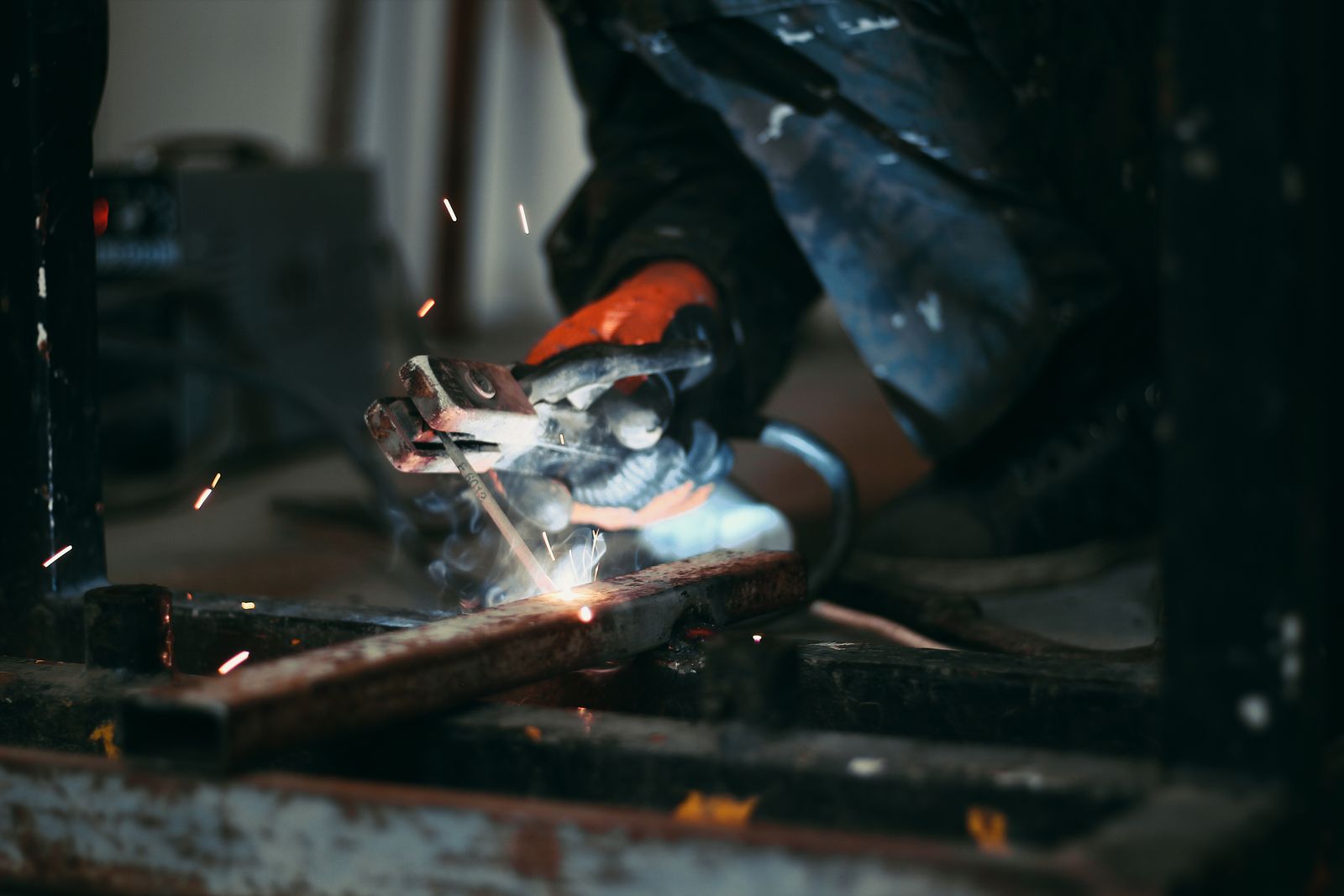
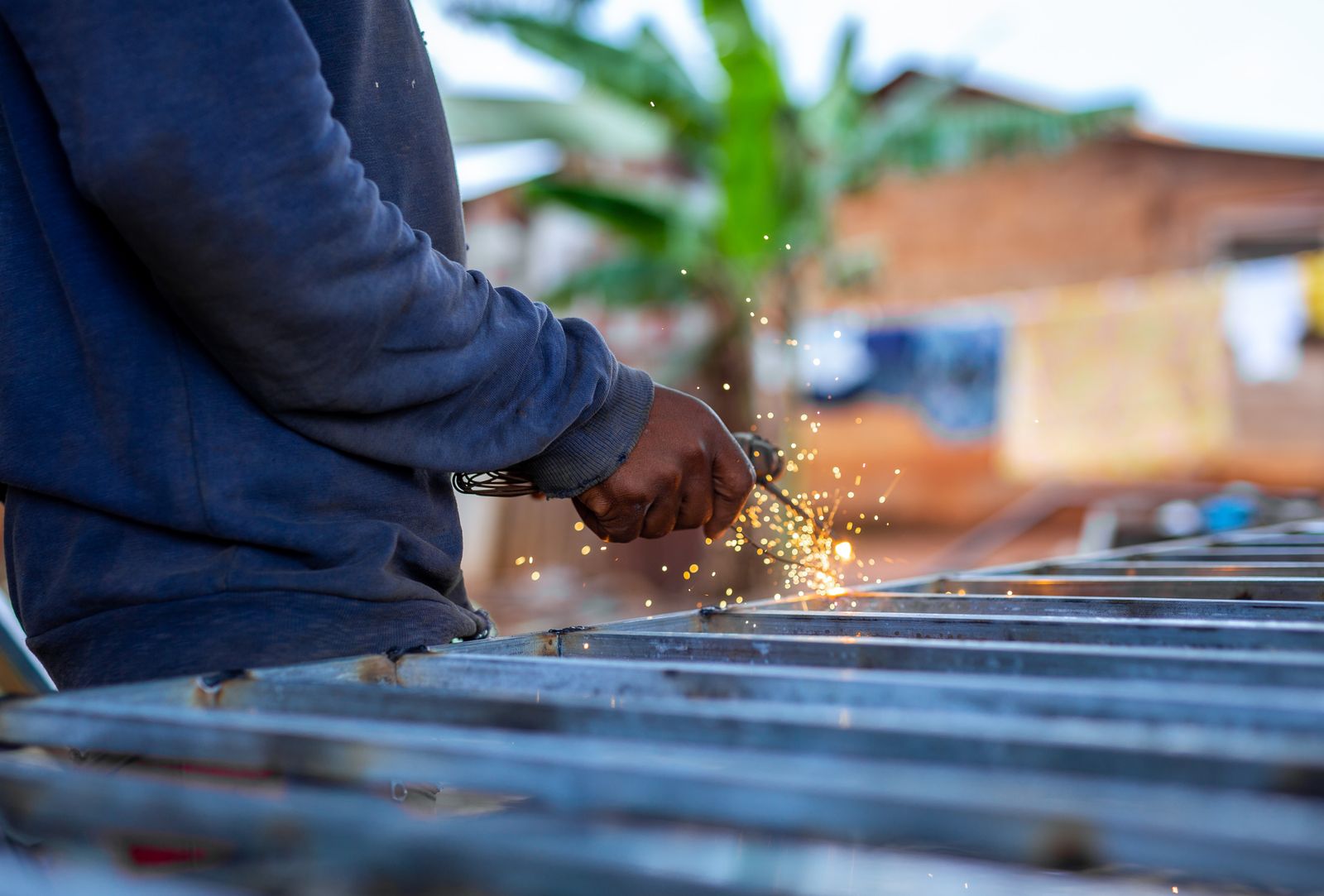
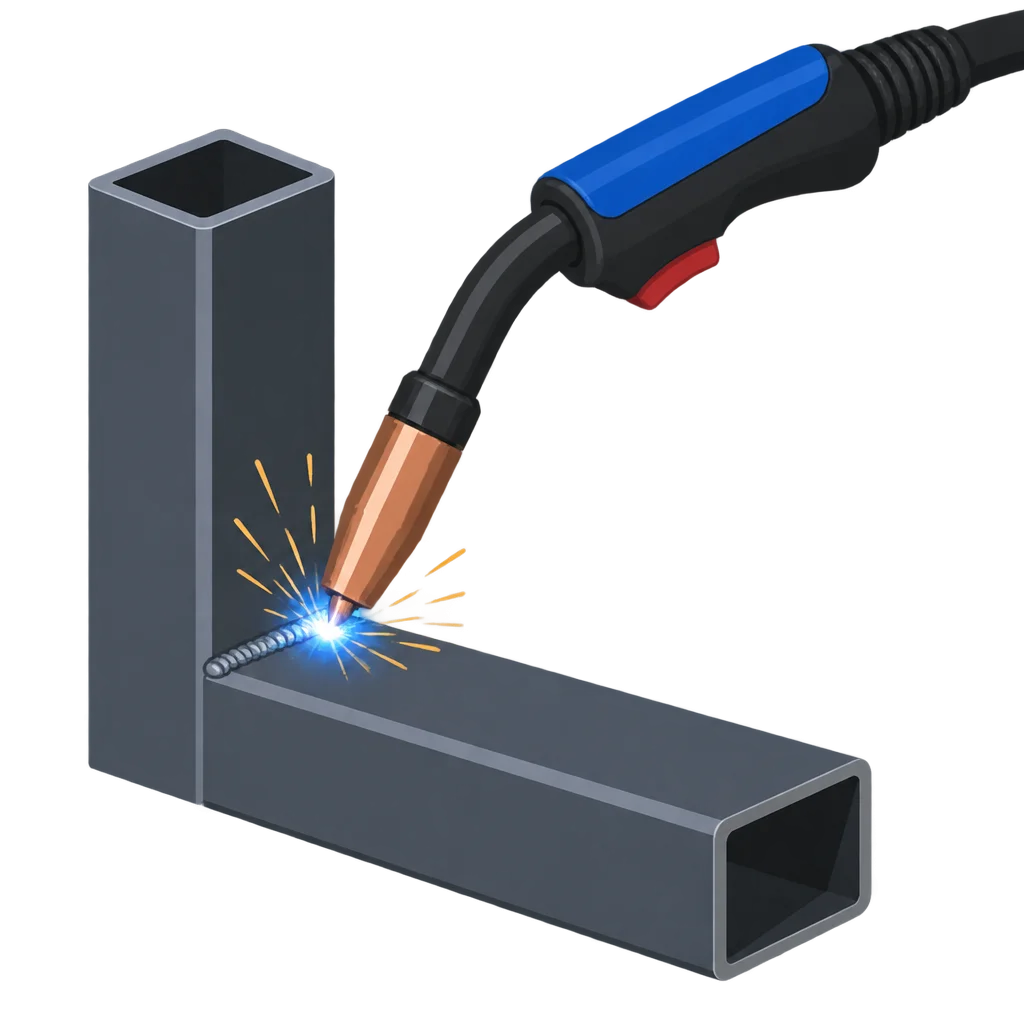
When individual profiles are clamped into heavy assembly jigs, the welding process begins. Welders rely on profound technical knowledge to control thermal expansion and contraction as molten metal fuses the joints together. Semi-automatic MIG processes ensure high deposition rates for thick structural sections, while specialized TIG setups handle delicate stainless steel handrails.
- Root passes executed with strict arc control
- Interpass cleaning to remove oxidation and impurities
- Visual inspections of every single fillet and butt weld
- Non-destructive testing using magnetic particles or ultrasound
- Post-weld grinding to eliminate sharp edges and stress risers
- Dimensional verification against the original engineering drawings
These steps ensure that load paths remain uninterrupted and stress concentrations are minimized across every welded connection.
Surface Protection Against Corrosive Environments
Once the framework is fully assembled, bare steel remains highly vulnerable to atmospheric moisture and oxidation. Before any paint touches the metal, surfaces undergo rigorous abrasive blasting to remove mill scale, rust, and surface oils, creating a uniform anchor pattern that mechanical coatings can grip.
Applying the protective layers requires precise climate control inside the painting booth. Primer coats containing zinc dust bond electrochemically with the steel substrate, followed by intermediate build coats and durable polyurethane topcoats that resist UV degradation, chemical spills, and physical impacts.
Final Assembly and On-Site Integration
Before leaving the workshop, complex structures undergo trial fitting to verify that bolt holes align and sections connect seamlessly. This prevents costly delays on the construction site where cranes and installation crews operate on tight schedules.
Transporting massive steel frames requires careful route planning and secure rigging to protect the fresh protective coating. On location, the installation team uses mobile cranes and precise leveling techniques to anchor the structure securely into the concrete foundation, completing the journey from a raw steel beam to a permanent, load-bearing architectural asset.
Comments
The steel frames arrived on schedule and the welding quality is exceptionally clean. Their crew handled the installation on-site without any hiccups. I am genuinely impressed with the structural precision.
Stefan Weber
Finding a workshop that gets the stair dimensions right on the first try is rare. Sinxtvyqen delivered robust steel elements with a flawless protective coating that looks ready for heavy industrial use.
Claudia Becker
We needed custom railings and structural supports for our new warehouse expansion. The team communicated clearly throughout the entire manufacturing process and the final metal components fit perfectly.
Sabine Wagner